



How to Dress Well When Your Body Has Changed
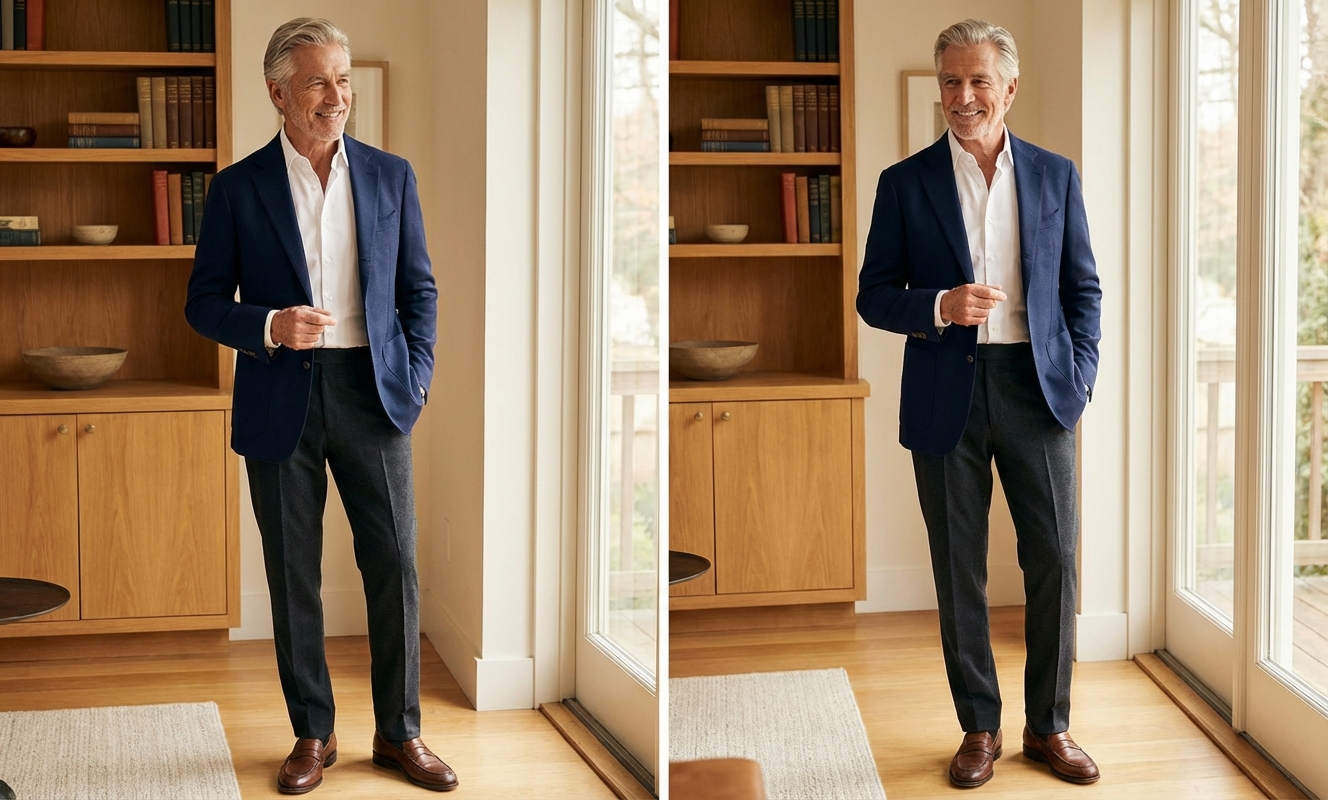
Dressing Well Is Not About Fighting Your Body. It Is About Working With It.
Somewhere along the way, a lot of men start avoiding mirrors. Not because they stopped caring about how they look, but because what they see does not match the image they have carried of themselves for decades. A little more weight around the middle. Shoulders that sit differently. A frame that has shifted in ways that feel unfamiliar.
Here is the truth: your body has changed, and that is completely normal. The mistake most men make is not accepting that reality. They keep wearing the same sizes, the same cuts, the same clothes they wore fifteen years ago, and then wonder why nothing feels right anymore. The clothes have not changed. But you have. And that is not a problem. It is simply information you can act on.
Fit Is the Most Powerful Tool You Have
No piece of clothing will do you any favors if it does not fit your current body. This is the single most important principle in dressing well at any age, and it matters even more when your proportions have shifted.
If your midsection has expanded, do not reach for baggy shirts to hide it. Oversized clothes do the opposite of what men hope. They add visual bulk and make you look less put-together, not more. Instead, look for shirts and blazers with a slight taper that follows your body without clinging to it. A well-fitted garment that skims your frame will always look sharper than something you are hiding inside.
The same logic applies to trousers. A mid-rise pant with a straight or slightly tapered leg tends to work well for most body changes that come with age. Avoid anything too slim, which can feel restrictive and look strained, and avoid anything too loose, which reads as sloppy rather than relaxed.
Tailoring Is Not a Luxury. It Is a Strategy.
If there is one investment that will immediately improve how your clothes look and feel, it is a good tailor. You do not need to buy expensive new pieces. You need the pieces you already own, or new ones you pick up at a reasonable price, to actually fit your body as it is today.
A skilled tailor can take in the waist of a jacket, shorten sleeves, adjust trouser hems, and reshape a shirt so it sits cleanly on your shoulders. These are relatively small alterations that cost far less than a new wardrobe, and the difference they make is remarkable. When something fits correctly, it looks like it was made for you. Because in a sense, it was.
Find a local tailor and build a relationship. Bring them your best pieces first and see how they work. Once you trust them, you can bring in new purchases before you even wear them.
Choose Fabrics That Drape Well and Feel Comfortable
As your body changes, the fabrics you wear matter more than they used to. Stiff, structured fabrics can look awkward if they are not cut precisely for your shape. Softer, draping fabrics tend to move with you and flatter a wider range of body types.
Wool and wool blends remain excellent choices for trousers and blazers. They hold their shape, breathe reasonably well, and look polished. For shirts, look for fine cotton with a slight weight to it. Very thin fabrics can cling in ways that feel uncomfortable. Very thick ones can add visual bulk. A medium-weight cotton sits cleanly and wears well throughout the day.
Stretch fabrics have also come a long way. Many dress trousers and even blazers now include a small percentage of elastane, which allows for more movement and comfort without sacrificing appearance. This is not a compromise. It is a practical choice that many well-dressed men are making.
Vertical Lines Are Your Friend
When you want to create a leaner, longer visual line, the most reliable technique in dressing is to use vertical elements in your outfit. A well-placed tie or pocket square draws the eye up and down rather than across. Trousers with a clean front crease lengthen the leg. A blazer with a single button stance elongates the torso.
Avoid horizontal patterns like wide stripes or bold checks if you are trying to minimize width. Solid colors and subtle vertical patterns will serve you much better.
The Right Mindset Makes All the Difference
The men who dress well, regardless of age or body type, share one common trait. They are not trying to look like someone they used to be. They are dressing with intention for who they are right now.
Your body has carried you through decades of life. It deserves clothes that fit it properly and show it a little respect. When you dress for your body as it actually is, rather than as you wish it were, everything changes. You carry yourself differently. You feel more comfortable. And you look exactly like what you are: a man who knows how to take care of himself.
That is style. And it has nothing to do with age or size.